- Rental car info - Niza cars or CarJet (Royal Cars)
- Rental motorcycle contact - Topacio (under construction 12/00) -- other links about Tenerife are here, too
- Ferry info to visit other Canary Islands - Trasmediterranea or Fred Olsen Lines
Trip to Tenerife, Canary Islands - December 2000
Well, a pattern is developing here. We had so much fun in Spain last December that we decided to try again (click HERE to read the previous trip report). We chose Tenerife hoping that it would be a little warmer since it's off the coast of Africa. What a great trip!
Please click on links below to view MORE pictures or for more information about some of the places we toured.
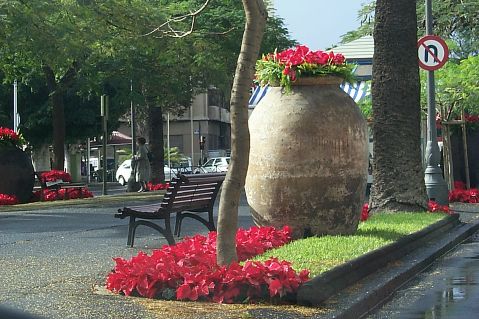
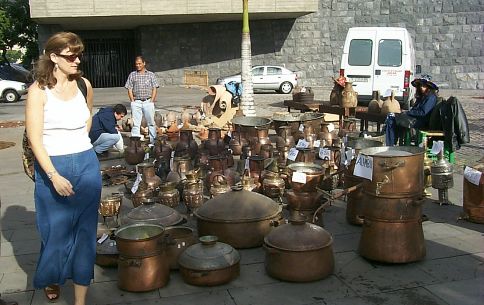
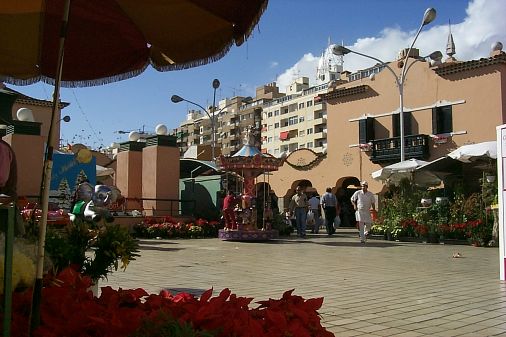
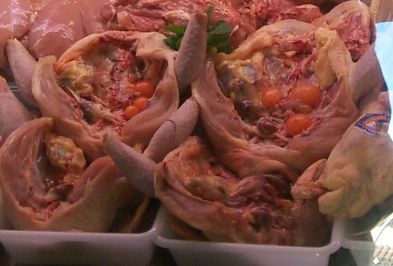
Lovely as the resort is, we spent most of our time sightseeing. We went to Santa Cruz several times. This is the main city on Tenerife. It's a bustling port, with wonderful shopping and a pretty pedestrian zone. We found an antique market/flea market on Sunday. This was held next to the African market which is a permanent facility, open all year round. We saw an odd thing - chickens are sold cut open with the innards (and eggs?) displayed. I know it's weird, but here's a picture (don't look if you are squeamish!).
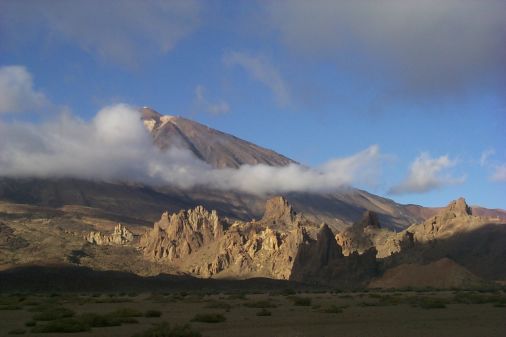
Tenerife is a volcanic island. The last eruption was in the 14th century. As a result the landscape is pretty severe, with lots of jagged lava rock (basalt?) visible everywhere. Mt. Teide and the National Park in which it is located offer the most incredible views of the lunar-like landscape. Parts of some movies, including the "Planet of the Apes" have been filmed here. We went from sea level to about 2,000 m in an hour's drive along some of the most curvy, twisty roads we have ever seen. Clouds obscured most of the scenery on our drive up that day, but we popped above the clouds for our first view of Teide.
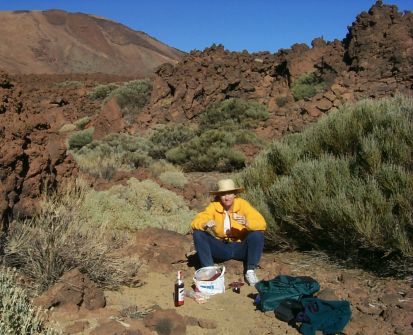
The National Park is very impressive, with such views as the "finger of God." Entrance to the park is free. We enjoyed a hike and picnic lunch on this lava field at the base of the cable car/vistor's center. It is very windy at that altitude, and COLD! The honey rum in the foreground was welcome hiking gear (only to keep us warm, of course).
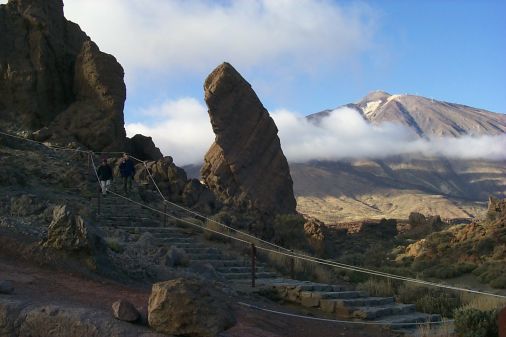
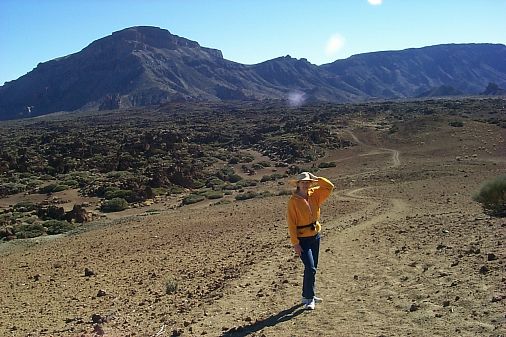
We took the cable car almost all the way to the summit, but could not hike quite all the way up. To do that, a permit is required. It is free, but has to be obtained in Santa Cruz. This is a conservation measure - in the past, most visitors took the cable car up, then hiked the short distance to the very top, causing damage to the trails. The cable car runs most days from about 9 a.m. to 2 p.m., weather permitting. It costs 3,000 pstas = about $15 USD (1/2 price for kids 14 years and younger). You can get more info on cable car hours, and where to get the permit at http://www.teleferico-teide.com. There are clean toilets, a restaurant, and gift shop in the visitors' center at the top of the mountain. You can do an incredible hike just below the peak.
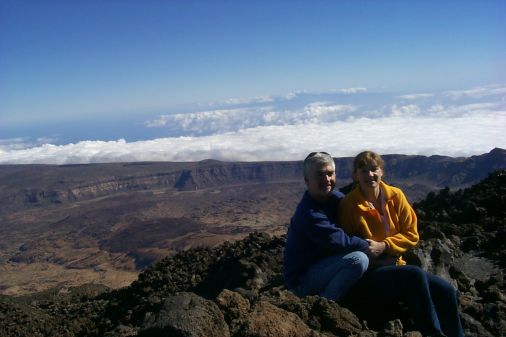
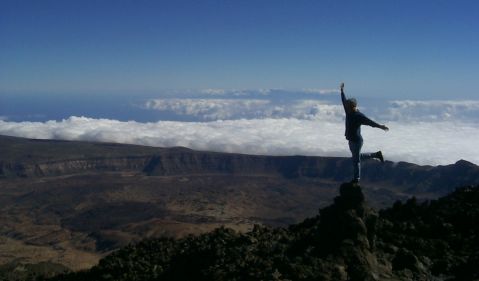
You can also trek all the way to the bottom if you wish. It takes about 1 1/2 hours to 2 hours, I think. This is a pretty tough hike, with a trail consisting of (mainly) loose lava rocks. Wear good boots! We had a great time. Here's Jeff demonstrating the way we felt about this adventure!
We also hiked the Barranco del Infierno (gorge of hell) near Adeje, which had a waterfall at the mid- or turn-around point. This was good exercise (about 2 hours total) but could be skipped in favor of a hike around Masca (see below). The restaurant Otelo at the start of the trail looked nice, though, with a terrace overlooking a gorge.
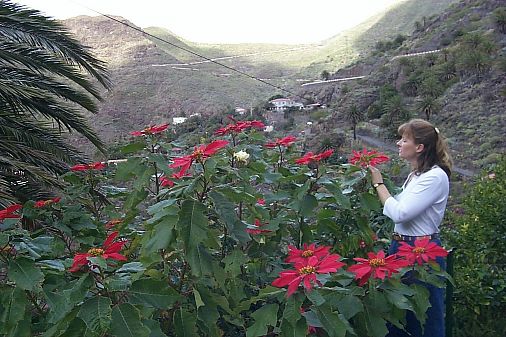
In spite of the rugged volcanic terrain and lack of a deep layer of top soil, agriculture seems important to the island's economic welfare - along with tourism, of course. We saw acres and acres of white-plastic-covered fields growing bananas, exotic flowers and other crops. There are poinsettia TREES on the island growing to a height of 10-15 feet or more! There are vineyards on the island, too. The vines are propped up with forked sticks, as in the olden days. This allows clearance to pick the grapes, and also makes room to grow potatoes under the vines!
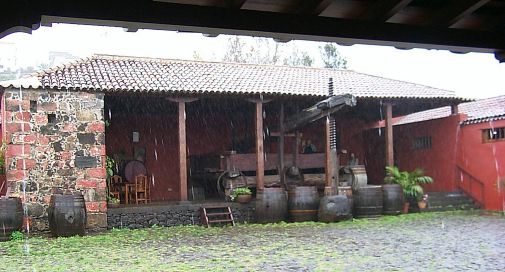
Of course, no trip is complete without sampling the local wines. So, a day trip was required to visit the Casa de los Vinos in El Sauzal. This is a restored 17th century farm house typical of the period. There is a wine museum, informational video (in several languages), wine tasting room, store, and restaurant here. We found this to be an educational afternoon (though we are not fans of Spanish wine) and the food in the restaurant was excellent! We tried some island specialties. Our favorite was the cod-filled sweet potatoes, with the corn cake drizzled with honey a close second! Find more info at http://www.cabtfe.es/casa-vino/.
| One of our favorite towns was Masca. This was a fabulous drive which made us wish we were on the motorcycle! That means it is a curvy, twisty ribbon of a road - 180 degree switchbacks - with unparalleled scenery! Take a look! | 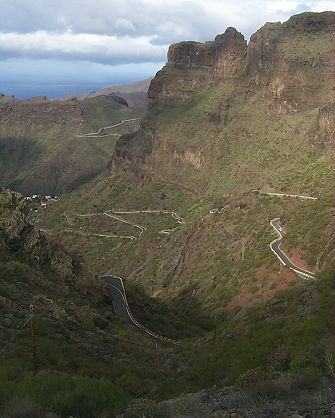 |
The destination was even more spectacular than the drive. We loved Masca. It is worth renting a car just for the day to see, or even (... shudder! ...) taking a tour on a bus in order to make a visit. The town is built on 3 steppes due to the hilly terrain.
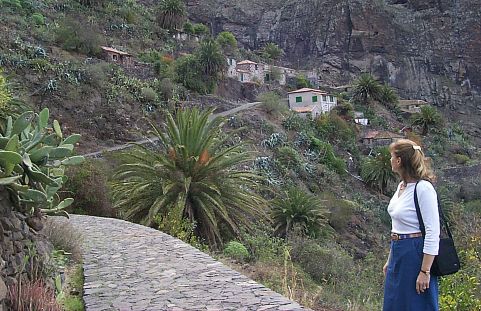
| The gorge offers a wonderful (although tough) 5 hour hike. We started at the "best" part of town, the oldest, which is the farthest Southeast (nearest Santiago del Teide). We found the Taberna Riquelme. The lady working there spoke English and gave us lots of info about the town, and fed us some typical Canarian food. We had some simple potatoes and mojo sauce (a picante sauce - either "red" or "green") and local prosciutto, cheese, bread. And, to wash it all down, good Tinto Vino (red wine). There are rooms here for about $15 per night (3,000 pstas). You can view the rooms HERE. We didn't stay here, and from the pictures, the rooms look kind of sparse, but what a unique stopover this would be if you are hiking through the area! | 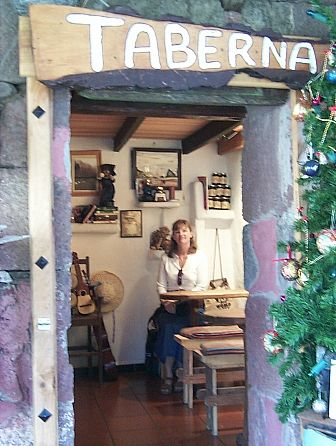 |
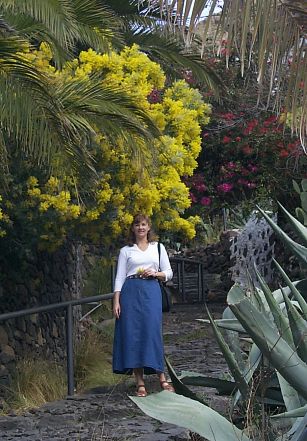 |
There is a romantic stone road to walk between the sections of the town. Some of the most beautiful flowering trees I have ever seen line the walk, along with date palms, orange and lemon trees. Ah, this is truly paradise! |
Well ... then we discovered Garachico ... another town we absolutely loved. It's so hard to choose a favorite spot on the island! This port town was Tenerife's most important harbor until its destruction by lava. It was re-built in the 18th century, and remains much the same today. As a bonus, the road from Santiago del Teide to Garachico is possibly even better than the others we enjoyed on the island. The twisty road took us through many small, quaint towns. We crested the cliff and were treated to this sight.
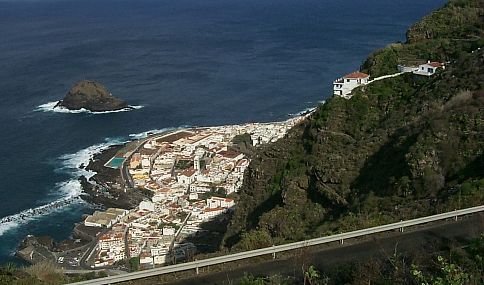
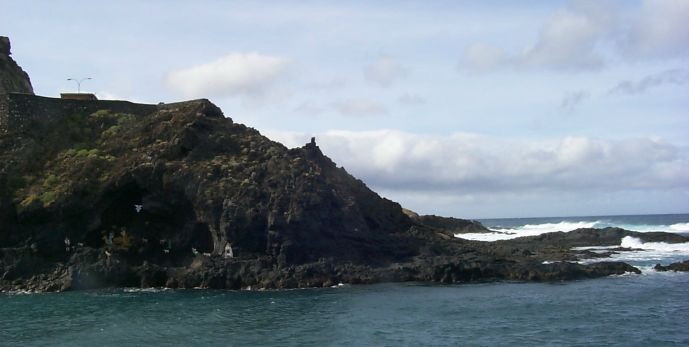
In addition to its beauty, this town boasts the Castillo de San Miguel, a monastery, and a salt-water pool next to the Castillo. Click here to see the castle (to R) and pool in foreground. Also on the street near the castle are the Centro de Artesania featuring local crafts. They have a web site at http://www.casa-balcones.com. They don't have online shopping yet, but I bet they will in the near future!. Also near the castle is a good restaurant (Isla Baja) and a first-class hotel (Hotel San Roque). This would be an all-day trip, and you might succumb to the temptation to stay overnight! What a wonderful town. The nicest surprise was the nativity (or creche?) built in a cave next to the harbor. You can see it to the left of the picture below, with the surf pounding the coastline to the R. You can also click here for a close-up.
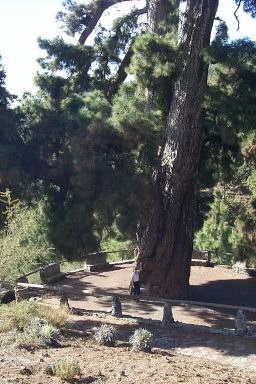
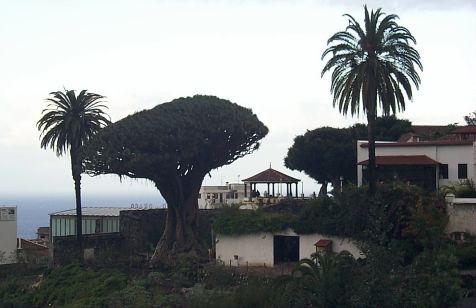
And, last but not least -- we discovered a few other noteworthy sites. The Pino Gordo is a HUGE pine tree near the town of Villaflor. I don't know how old, but it is ancient and almost as large as some redwood trees! We also saw the Dragon Tree in Icod de Los Vinos. Island legends claim its age to be 5,000 years, though experts guess at 400-600 years old. Also near Icod is the longest volcanic cave in the world (14,870m in length).
Of course, we left many sights unseen. There's only so much you can do in one week! We missed the Pyramids in Guimar, several theme parks (Loro Pargue, Parques Exoticos, & a Penguin park). Visit this site for more general info about what to see and do on Tenerife.
Here are a few more links related to a Tenerife trip:
Here are some other links you may enjoy:
| Our Travel INDEX PAGE |
European Trips | CASTLES in Europe |
|
BMW Motorcycles |
Shopping Links POLISH POTTERY EUROPEAN BAZAAR |
FREE EuropaBARGAINS Travel and Shopping EZINE (subscribe at bottom of page) |

Please MAIL US at munnjt@munnwerks.com
. We'd love to hear about your travels, too.

(as of 12/26/00)